Double girder gantry cranes are among the most critical pieces of lifting equipment used in heavy industries such as steel production, precast concrete, shipbuilding, power plants, rail yards, and large-scale fabrication workshops. These cranes are designed to handle substantial loads, long spans, high lifting heights, and demanding duty cycles – often in harsh outdoor environments. While specifications like rated capacity, span, and lifting height are easy to compare on paper, one factor consistently proves decisive in real-world performance: the experience of the manufacturer.
Manufacturer experience goes far beyond how long a company has existed. It reflects accumulated engineering know-how, application understanding, quality control maturity, and the ability to anticipate real operating conditions. This article explores in depth why manufacturer experience is so critical to the performance, safety, reliability, and lifecycle value of double girder gantry cranes.
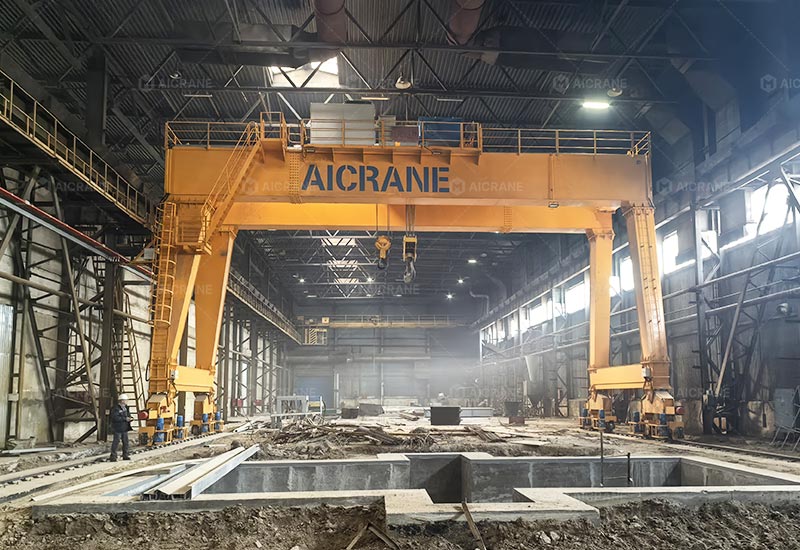
1. Experience Shapes Structural Design Quality
The structural system is the backbone of any double girder gantry crane for sale. Experienced manufacturers understand that structural design is not just about meeting minimum strength calculations—it is about long-term fatigue resistance, stability, and real load behavior.
1.1 Load Path Optimization
Manufacturers with years of gantry crane projects behind them have refined how loads are transferred from the hoist to the girders, legs, end beams, and rails. They understand how asymmetric loading, trolley positioning, wind forces, and dynamic effects influence stress distribution. This results in:
-
Optimized girder cross-sections
-
Reduced stress concentrations at welded joints
-
Improved torsional stiffness for wide spans
In contrast, less-experienced suppliers may rely on conservative or simplified designs that meet static requirements but perform poorly under repetitive heavy-duty operation.
1.2 Fatigue Life Considerations
Double girder gantry cranes often operate in work duty classes such as A5, A6, or higher. Experienced manufacturers incorporate fatigue analysis from the earliest design stages, selecting appropriate steel grades, weld details, and reinforcement methods. This directly affects:
-
Service life of the crane
-
Crack resistance in critical joints
-
Maintenance intervals and downtime
2. Proven Experience Improves Hoisting and Traveling Performance
The performance of a double girder gantry crane is defined not only by how much it can lift, but how smoothly, precisely, and safely it handles loads.
2.1 Hoisting Mechanism Matching
Experienced manufacturers know how to properly match hoists, motors, gearboxes, and brakes to the crane’s real operating conditions. This includes:
-
Selecting appropriate lifting speeds for heavy or precision loads
-
Designing dual-hoist or synchronized hoisting systems when required
-
Ensuring sufficient safety margins for brake torque and thermal performance
This level of system matching is rarely achieved without extensive field experience across different industries.
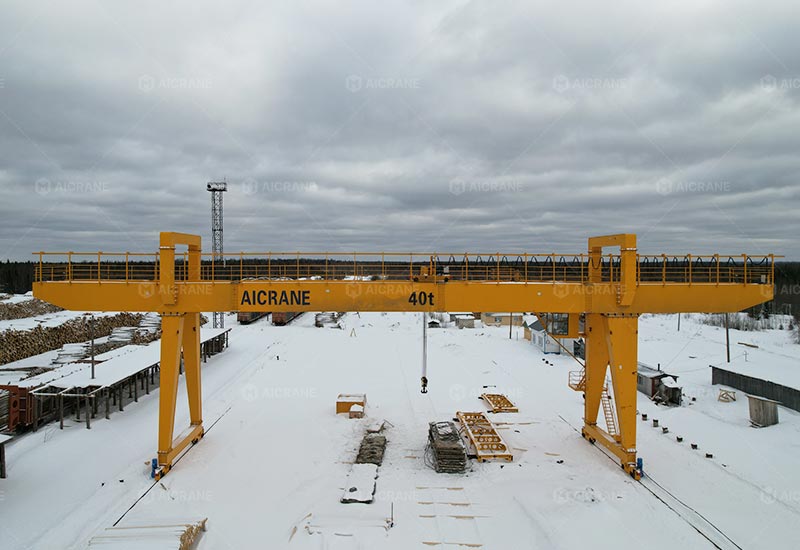
2.2 Travel Stability and Alignment
For long-span large gantry cranes, synchronization of traveling mechanisms is essential. Experienced manufacturers design:
-
Balanced drive systems to prevent skewing
-
Proper wheel load distribution to minimize rail wear
-
Structural tolerances that maintain alignment over time
These details directly impact smooth travel, reduced vibration, and lower long-term maintenance costs.
3. Application Knowledge Comes Only from Experience
Every industry places unique demands on a double girder gantry crane. A manufacturer with deep experience understands that application context is as important as crane capacity.
3.1 Industry-Specific Challenges
An experienced manufacturer has already encountered and solved problems such as:
-
High-temperature environments in steel mills
-
Corrosive outdoor conditions in coastal yards
-
Dust-heavy environments in cement and precast plants
-
Tight positioning requirements for mold or equipment handling
This experience allows them to propose practical design adaptations—such as sealed electrical systems, corrosion-resistant coatings, or specialized control modes—before problems arise.
3.2 Customization Based on Real Projects
Experienced manufacturers do not rely on one-size-fits-all designs. Instead, they adjust:
-
Girder camber and stiffness
-
Leg height and portal clearance
-
Control logic and operating modes
These refinements are based on lessons learned from previous installations, ensuring better real-world performance.
4. Manufacturing Experience Ensures Consistent Quality
Design excellence alone is not enough. The performance of a double girder gantry crane depends heavily on manufacturing execution.
4.1 Welding and Fabrication Standards
Experienced manufacturers have:
-
Qualified welding procedures
-
Skilled welders familiar with thick-plate structures
-
Strict inspection routines for critical welds
This reduces the risk of hidden defects that could compromise structural integrity over time.
4.2 Dimensional Accuracy
Large gantry cranes require precise fabrication to ensure smooth assembly and proper alignment on site. Experienced factories understand how to control:
-
Girder straightness and camber
-
Leg squareness and mounting tolerances
-
Machining accuracy for wheel assemblies and bearing seats
Such precision directly affects crane stability, travel performance, and service life.
5. Electrical and Control System Reliability Is Experience-Driven
Modern double girder gantry cranes increasingly rely on advanced electrical and control systems. Manufacturer experience plays a key role in making these systems reliable rather than complicated.
5.1 Practical Control Logic
Experienced manufacturers design control systems that reflect how operators actually work. This includes:
-
Smooth acceleration and deceleration curves
-
Logical interlocks between hoisting and traveling motions
-
Load protection and overload handling strategies
These features improve safety while also enhancing productivity.
5.2 Environmental Protection
Double girder outdoor gantry cranes face rain, dust, wind, and temperature variations. Manufacturers with long-term experience know how to:
-
Select appropriate enclosure protection levels
-
Design cable routing to prevent wear and water ingress
-
Ensure long-term stability of sensors and limit switches
6. Installation and Commissioning Expertise Affects Performance
A well-designed crane can still perform poorly if installation is not handled correctly. Experienced manufacturers understand the importance of installation guidance and commissioning.
6.1 Installation-Friendly Design
Manufacturers with real project experience design cranes that are easier to assemble accurately on site. This includes:
-
Logical segmentation of girders and legs
-
Clear alignment reference points
-
Practical tolerance allowances
6.2 Commissioning Based on Experience
During commissioning, experienced engineers know what parameters to fine-tune:
-
Brake response times
-
Motor acceleration profiles
-
Load test behavior under different operating modes
This ensures the crane performs as intended from day one.
7. Long-Term Reliability and Lifecycle Value
The true performance of a double girder gantry crane is measured over decades, not months. Manufacturer experience directly influences total lifecycle value.
7.1 Reduced Maintenance Issues
Experienced manufacturers design cranes with maintenance in mind:
-
Accessible components
-
Standardized spare parts
-
Clear maintenance documentation
This reduces downtime and simplifies long-term operation.
7.2 Upgrade and Modernization Capability
Over time, users may need to upgrade control systems, increase automation, or adapt the crane to new tasks. Manufacturers with extensive experience are better positioned to support:
-
Retrofit solutions
-
Capacity or duty cycle upgrades
-
Integration with modern monitoring systems
8. Risk Reduction Through Experience
Finally, experience reduces risk—for both the buyer and the operator. A gantry crane manufacturer with a long track record has already faced:
-
Complex engineering challenges
-
Unusual site conditions
-
High-demand operational scenarios
This accumulated knowledge allows them to identify potential risks early and address them proactively, rather than reacting after problems occur.
Conclusion
In double girder gantry cranes, performance is not defined solely by specifications or price. It is the result of countless engineering decisions, manufacturing practices, and practical insights—most of which come only with experience. An experienced manufacturer brings proven structural design, optimized hoisting systems, application-specific solutions, reliable manufacturing quality, and strong lifecycle support.
For industries that depend on safe, efficient, and long-lasting heavy lifting equipment, choosing a manufacturer with deep double girder gantry crane experience is not just a preference—it is a strategic investment in performance, safety, and long-term operational success.